← Insights · Guide
AR murals for municipalities: the complete guide
ARify · September 2026 · 9 min read
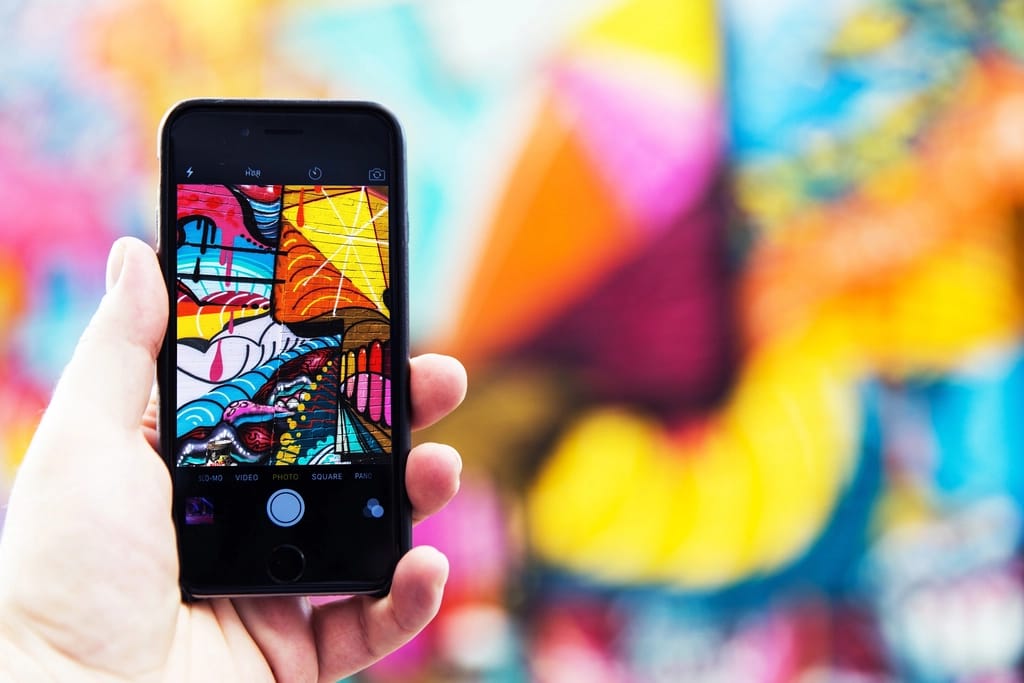
Short answer: an AR mural is an existing piece of public art with a digital layer over it. A visitor scans a QR code or taps a link, points their phone at the wall, and through the screen the artwork responds — no app required. For a municipality, it makes an asset you already own more engaging, more shareable, and measurable for the first time.
This guide covers what the technology is, how it gets funded, who it's a win for, what it costs, and how to avoid the mistakes that make these projects fail.
1. What an AR mural actually is
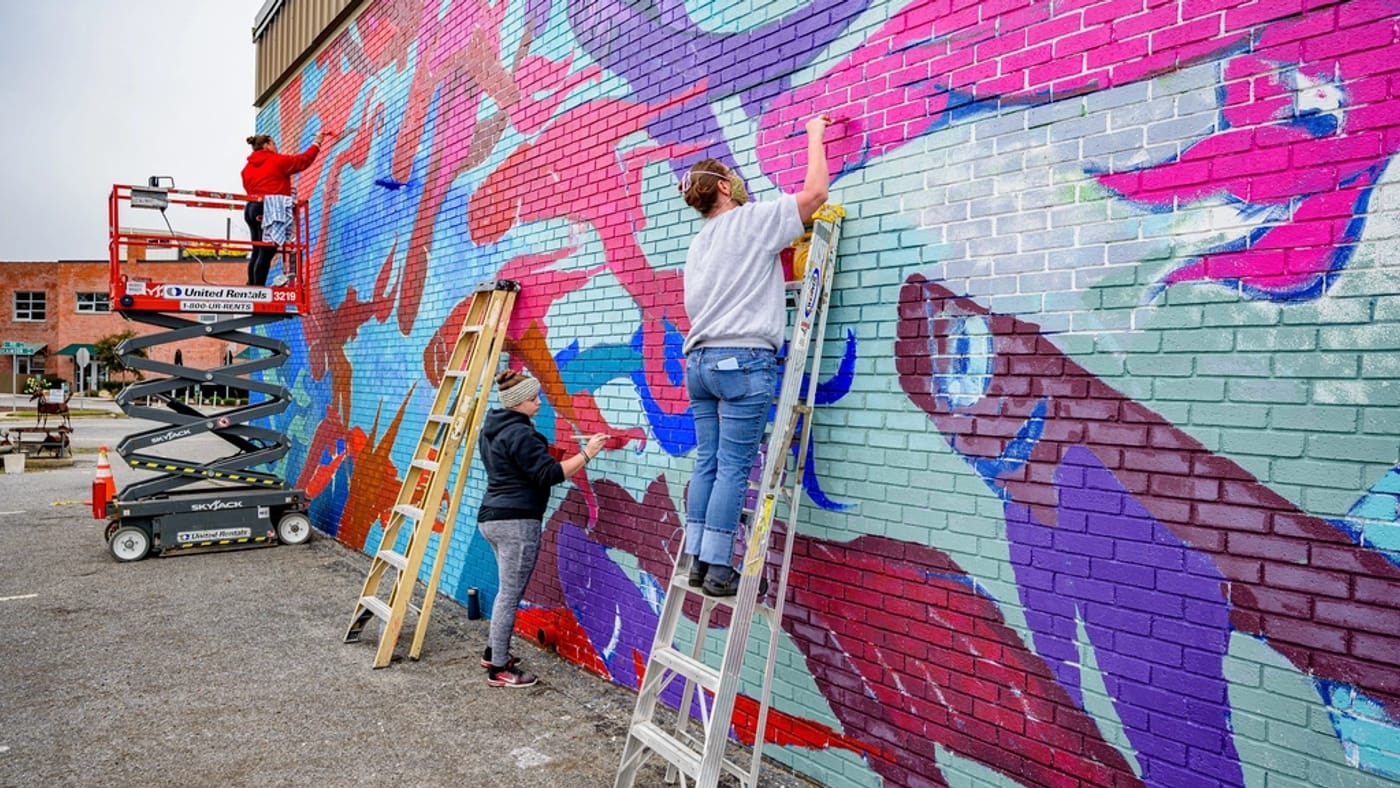
The physical artwork doesn't change. Nothing is painted over, attached, or drilled into the wall. A visitor scans a code on nearby signage and their phone camera opens in the browser. Through the screen the artwork responds: it animates to a tap, a character steps out of the scene and speaks, hidden layers peel away, a game begins, or a doorway opens onto the same place in another time.
Built as WebAR, there is no app to download. That matters in public space, where you're asking a stranger for their attention with no prior relationship. Every install step loses most of the audience.
→ Related: WebAR vs app-based AR — which is right for your activation?
2. Why municipalities are doing this
Four reasons come up again and again.
The unveiling problem
Public art gets one day of concentrated attention. After that it becomes part of the streetscape. Councils fund a moment, and there is rarely a second act.
The measurement problem
Almost no municipality can say how many people engaged with a given mural. That makes cultural budgets hard to defend, hard to grow, and easy to cut. A digital layer produces scan counts, session lengths and shares.
The message problem
Most public art is trying to say something — a story, a value, a moment worth remembering. Standing in front of it, most of that goes unsaid. A digital layer lets the work speak: what it means, why it's here, what it wants you to feel.
The discovery problem
For most visitors, your town is whatever Google shows them — the reviews, the photos, the top-ten list. An activation is a channel you control. From the wall, you send people to the museum, the next stop, a local business, this weekend's event — chosen by the town, not the algorithm.
3. Budget and funding
A single-mural activation starts around $10,000 CAD, with multi-site trails from $18,000. That generally sits below the cost of commissioning a new mural in most Canadian markets — the framing that tends to work in budget conversations. You're not asking for new-art money. You're asking to make existing art work harder.
Funding usually comes from a budget that already exists:
- Public art & culture budgets. Maintenance and interpretation lines, rather than new-commission lines.
- Tourism & destination funds. Where visitor experience and dwell time are stated objectives.
- Heritage & interpretation grants. Especially where the mural depicts local history.
- Downtown / BIA budgets. Where foot traffic downtown is the goal.
- Festival & event budgets. Where the activation is timed to a specific moment.
→ Related: How much does an AR mural cost? · Which budget line this comes from
4. What each team gets out of it
These projects move fastest when everyone can see their own win in it, and each group's is different.
| Team | What they gain |
|---|---|
| Cultural & public art staff | The collection does more, and the original is never touched — an easy yes for the people whose job is protecting it. |
| The original artist | Renewed attention on their work, credit built in, and links that send new audiences back to them. |
| Council | A cultural win they can measure and show constituents — at a fraction of the cost of a new commission. |
| Communications | A launch worth sharing and a story that keeps going, instead of a one-day ribbon-cutting. |
| Tourism & economic development | Longer dwell, more foot traffic, and a channel that points visitors at local businesses. |
| Residents & visitors | A richer experience of a place they thought they already knew. |
The artist has the most to gain — tell them early. An AR layer isn't an alteration; the painting is untouched. It's renewed attention on work that had faded into the background, with links that send new audiences back to them. Brought in at the start, the artist usually becomes the project's best advocate.
5. Timeline
A single-mural activation runs about four to six weeks from kickoff to live.
- Consultation and brief — the wall, the story, the goal.
- Design and production — concept, assets, animation, interaction.
- Deployment and on-site validation — tracking tested in real conditions, signage installed.
- Support and reporting — hosting, monitoring, engagement data.
Work backwards from any unveiling or festival date and add buffer. Municipal approval cycles are usually the long pole, not production.
6. What to ask a vendor
Questions that separate serious providers from the rest:
- Does it require an app? If yes, what drop-off do they expect? In public space, an install requirement removes most of the audience.
- What happens to the experience in three years? Who hosts it, what does upkeep cost, and what if the vendor disappears?
- What exactly will we be able to measure, and how do we get that data?
- Who owns the finished experience? Confirm you can use it for your own tourism and marketing.
- Show it working on a real wall, outdoors, in daylight. Controlled-condition demos hide tracking problems.
- What happens if the mural is damaged, repainted, or removed?
→ More answered on our FAQ.
7. What makes these projects succeed
Lead with the experience, not the technology
The build is the straightforward part. What happens on the wall — and whether it's worth stopping for — is where the value is, and it deserves most of the conversation.
Design the on-site cue alongside the experience
Signage is the discovery mechanism. A clear “scan to bring this mural to life” prompt is what turns a passer-by into a participant.
Bring the artist in early
Framed as renewed attention on their work, with links back to them, an AR layer is usually welcomed — and the artist often becomes the project's best advocate.
Decide what you'll measure before launch
Agreeing on success metrics up front is what makes the second project easy to fund.
8. Where to start
Pick one wall. Ideally one with a story that isn't legible from looking at it, in a spot with existing foot traffic, where the artist is reachable and supportive. Prove the model there, measure it properly, and use those numbers to fund the next one. A municipality on Canada's west coast did exactly this — one flood mural, measured from day one.
→ See it in practice: the Trail, BC case study
That's how a single activation becomes a programme.
Working on a specific wall? The municipalities page lays out scope, pricing and how a first pilot runs.