AR murals
The wall stays exactly as it is. Everything else changes.
We layer augmented reality over a mural a community already owns. Point a phone at the wall and the painting moves — the story plays out where it actually happened. No app, no scaffolding, not one brushstroke touched.
brushstrokes touched, apps to download, or scaffolding on site
weeks from a photo of the wall to a live experience
to pilot one wall, hosting included for good
You already paid
for the hard part.
The mural was the expensive, slow, hard-to-approve half of the project, and it is already behind you. This is the cheap half that makes it keep working — the history playing on the spot it happened, and the first numbers that wall has ever produced.
Nothing gets painted over
The original stays exactly as the artist left it. We add a layer on top that only exists through a phone, so there is no repaint, no varnish, no scaffolding and nothing to undo later.
The story stands where it happened
Audio, archive photography and animation play on the spot the mural depicts. A plaque cannot do that, and neither can a website nobody visits.
One wall, then the collection
The first mural is a pilot, not the whole programme. The same build repeats across the rest of the collection at four to six weeks per wall.
It reports back to council
A painted wall produces no data at all. This one produces a number you can put in a budget report — openings, time spent, and taps through to the town's own pages.
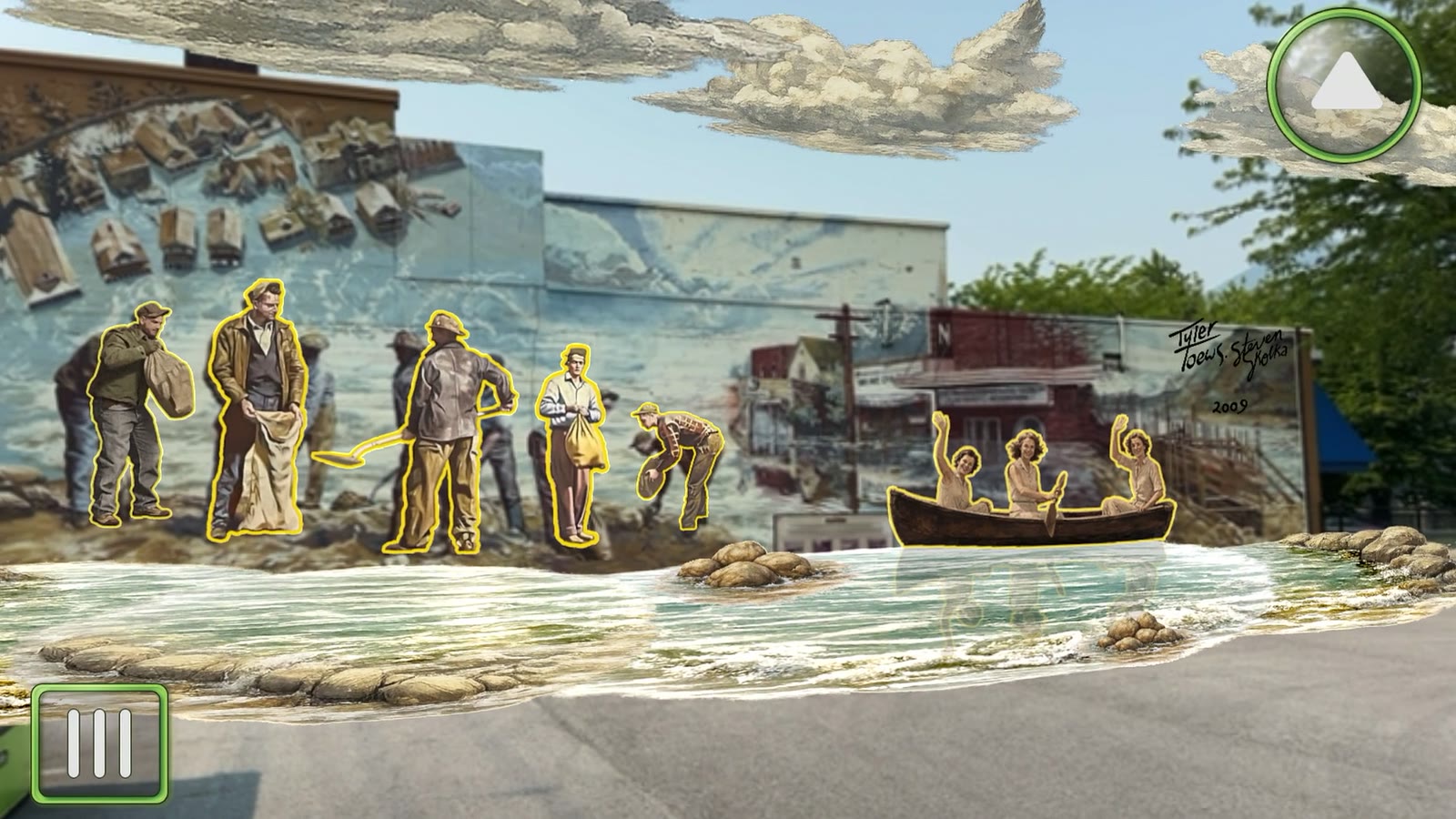
Live now · Trail, British Columbia
This is the format, running in public.
A 1948 flood mural by Tyler Toews and Steven Kolka. We added the flood itself — water rising across the lot, the painted crew moving — and it has run outdoors, unattended, through a Canadian winter.
See how it was built →What we activate
Heritage & historical murals
Recreate the event the wall depicts, in place.
Contemporary & festival murals
Animate the artist's own work, with their involvement.
Mural trails & walking routes
Several walls, one build, one QR per stop.
Faded or ageing work
Add a layer rather than commission a repaint.
Questions we get
Before you brief it in.
Do we need the original artist's permission?
We ask for it as a matter of course, and we bring the artist in where they are reachable — on Trail's mural the experience links out to the painter's own work, so every scan sends him traffic. It is the right thing to do and it makes a better experience.
What if the mural is faded or damaged?
Often fine, and sometimes an advantage — the AR layer can show the wall as it looked when it was painted. The tracker needs enough contrast and detail to lock onto; send a photo and we will tell you honestly.
Does weather or night-time break it?
Rain and snow are fine. Darkness is the real limit — the camera needs to see the wall, so an unlit mural will not track at night. Where that matters we design the on-site sign to say so, or the site adds a light.
Who owns the finished experience?
You receive full rights to use it for your location and your marketing. ARify keeps portfolio rights. The build is a static web project, so if you ever want it moved it hands over cleanly.