Case study · Trail, BC
“The Flood”
A forgotten mural brought to life to tell a story
The Municipality of Trail owned a wall nobody stopped for. We left the paint untouched and built the 1948 flood on top of it — running in any phone browser, with no app to download.
AR Renovation: we keep the original art and add a digital layer over it. No new mural gets commissioned, nothing is painted over, and the artist's work stays the artist's.
At a glance
What changed for Trail.
From walk-past to stop-and-stay
A wall people used to walk straight past is now a stop — phones up, pulled into the story.
More than a plaque could ever say
Stand where the 1948 flood hit and the water rises, an audio tour plays, archival photos layer in — the full story, on the exact spot. A plaque can't come close.
You can see it working
Every scan is counted — how long people stay, where they tap. The wall reports back, so you know it landed instead of hoping it did.
The situation
The story was already on the wall. Nobody could read it.
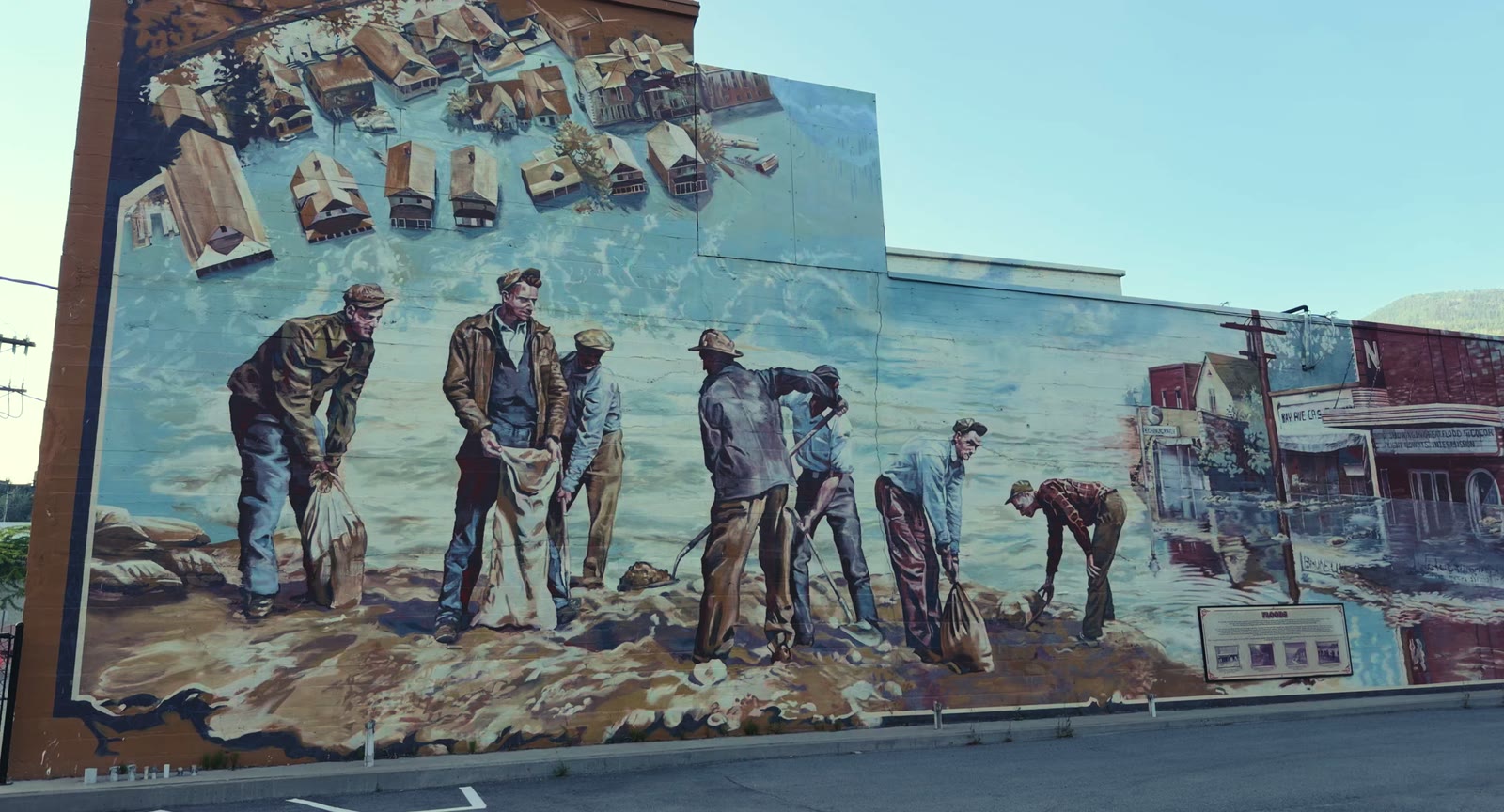
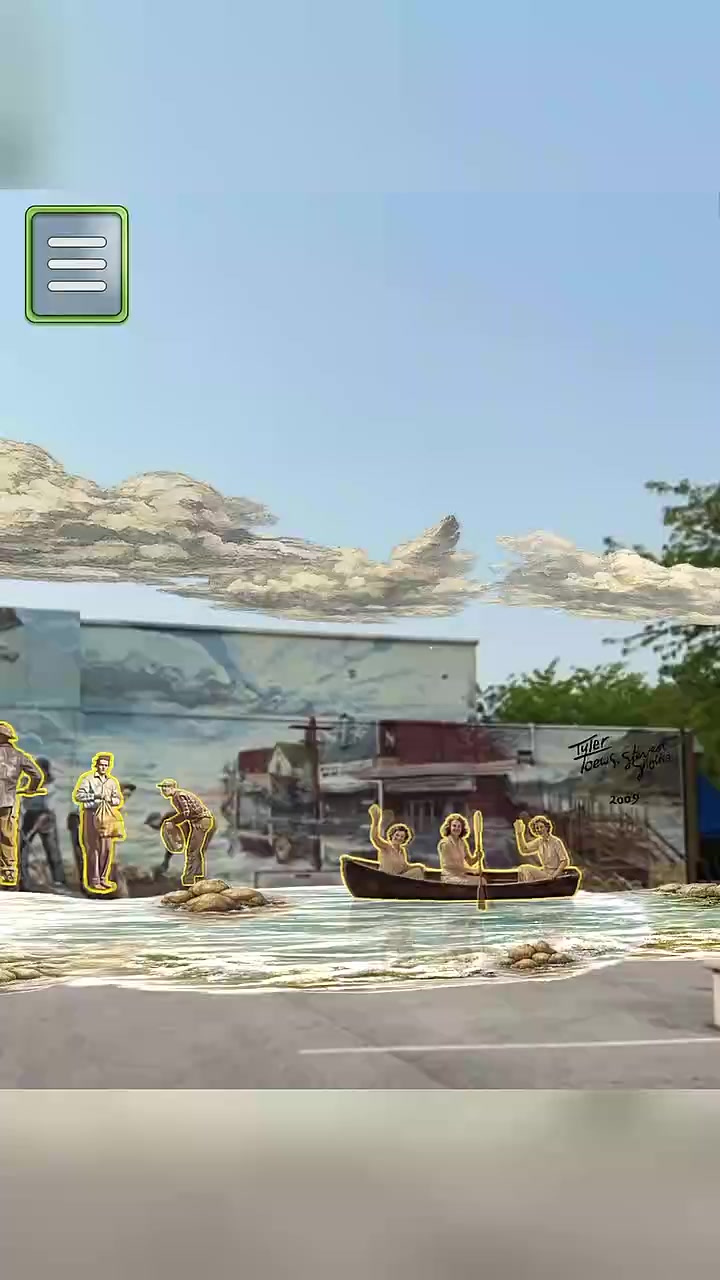
Tyler Toews and Steven Kolka painted “The Flood” on the back of a hotel in 2009. It records the summer the Columbia River took the town: water six feet over Main Street, residents filling sandbags for days to hold the line, businesses closed until further notice.
Seventeen years later the wall faces a parking lot. A visitor with no local context sees men with shovels and keeps walking. One of the defining events in Trail's history sat there in full view, handing over none of itself.
What we built
What the wall does now.
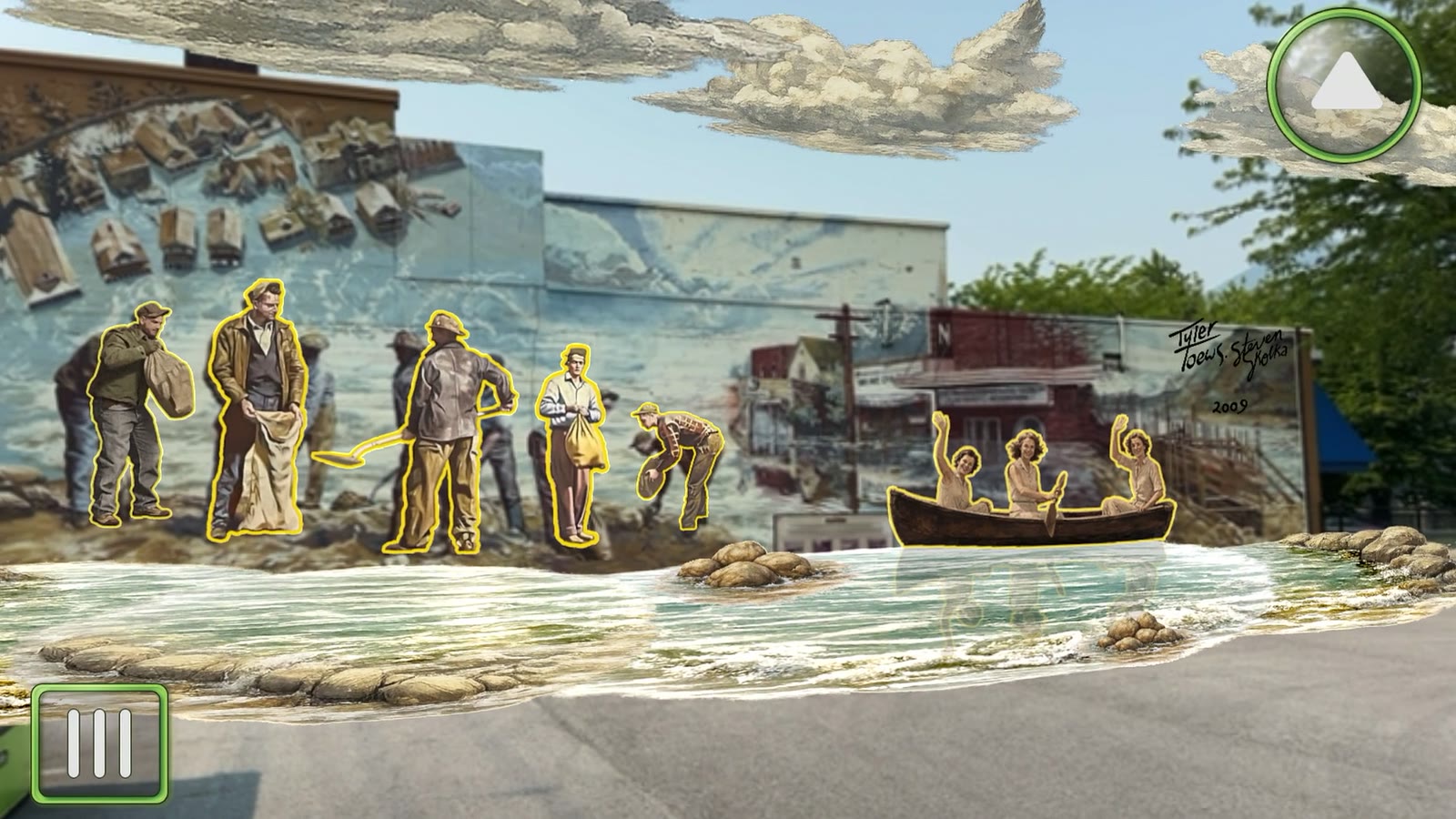
We layered a WebAR experience over the existing mural. Nothing new got painted, and nothing got installed beyond a QR sign. A visitor scans it and this happens:
Scan, no install
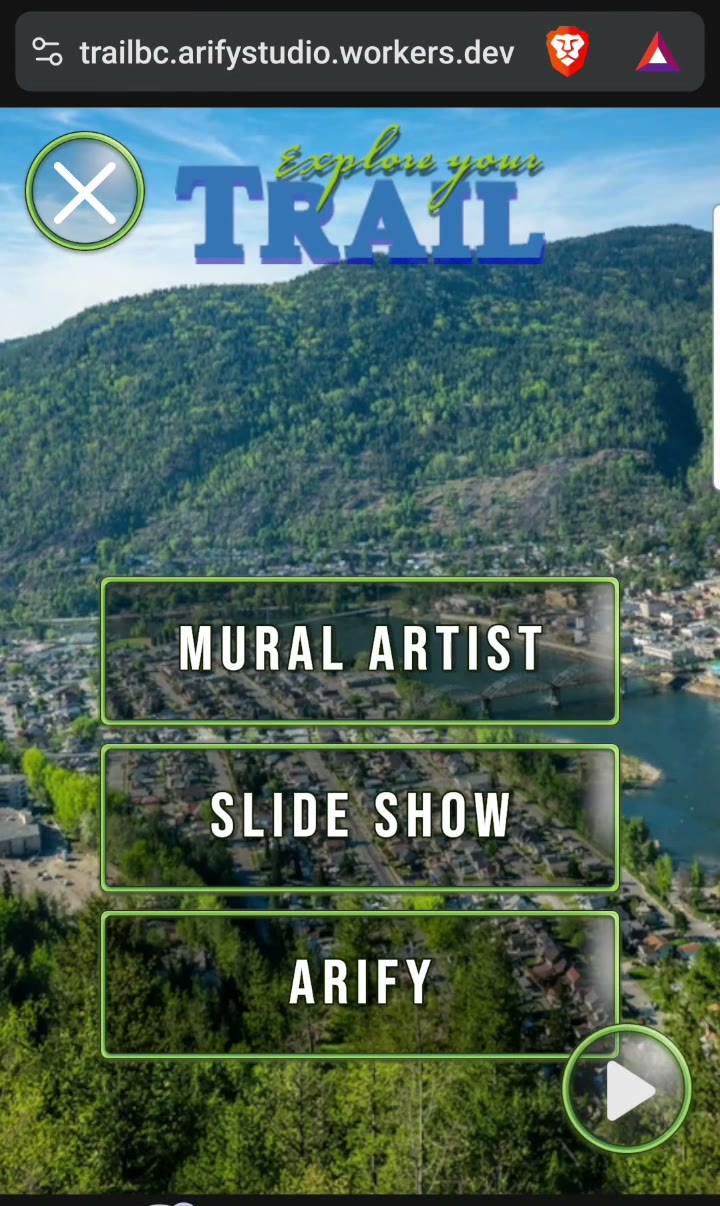
The camera opens straight onto the AR view. No app store, no account, no download.
The flood happens again
Water rises across the scene and spills off the wall into the street, at the scale it reached in 1948.
Voices from 1948
An audio tour cut from 1940s film footage narrates the flood while you stand where it happened.
The archive, in place
Visitors swipe through photographs of the flooding, standing where each one was shot.
Inside the experience — the archive
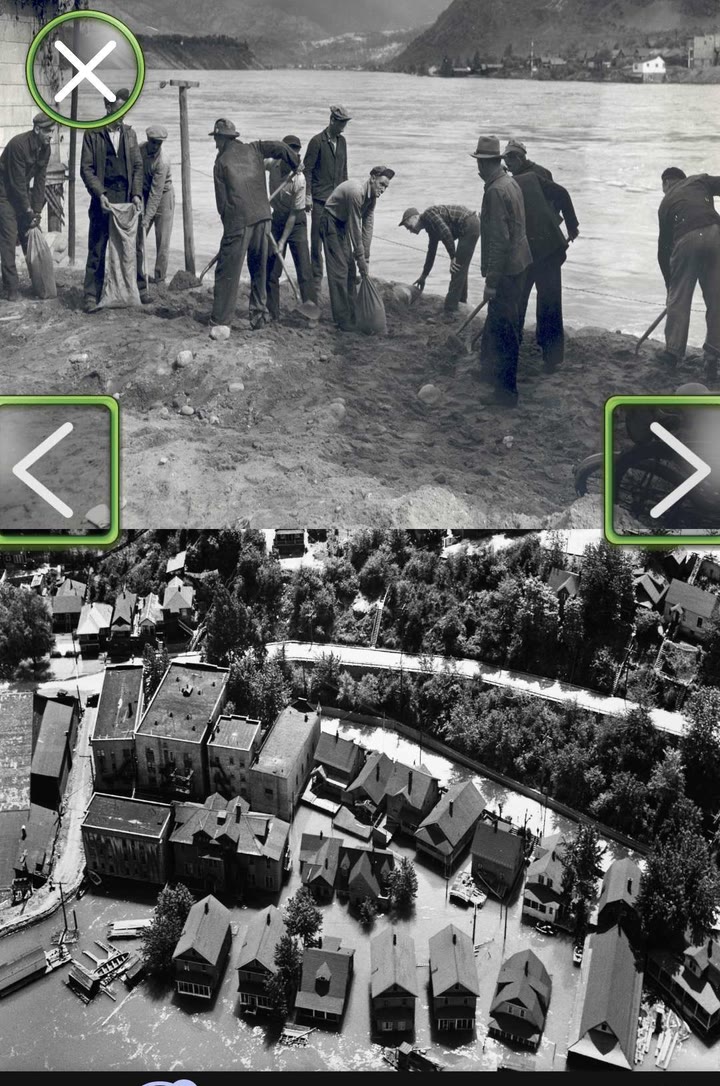
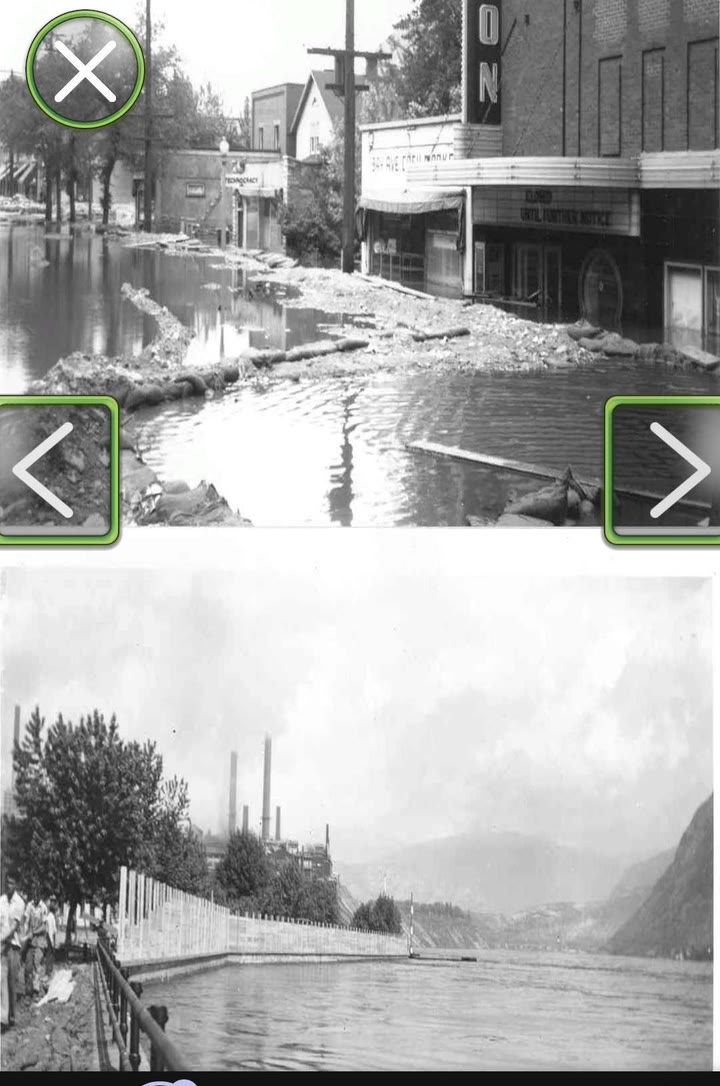
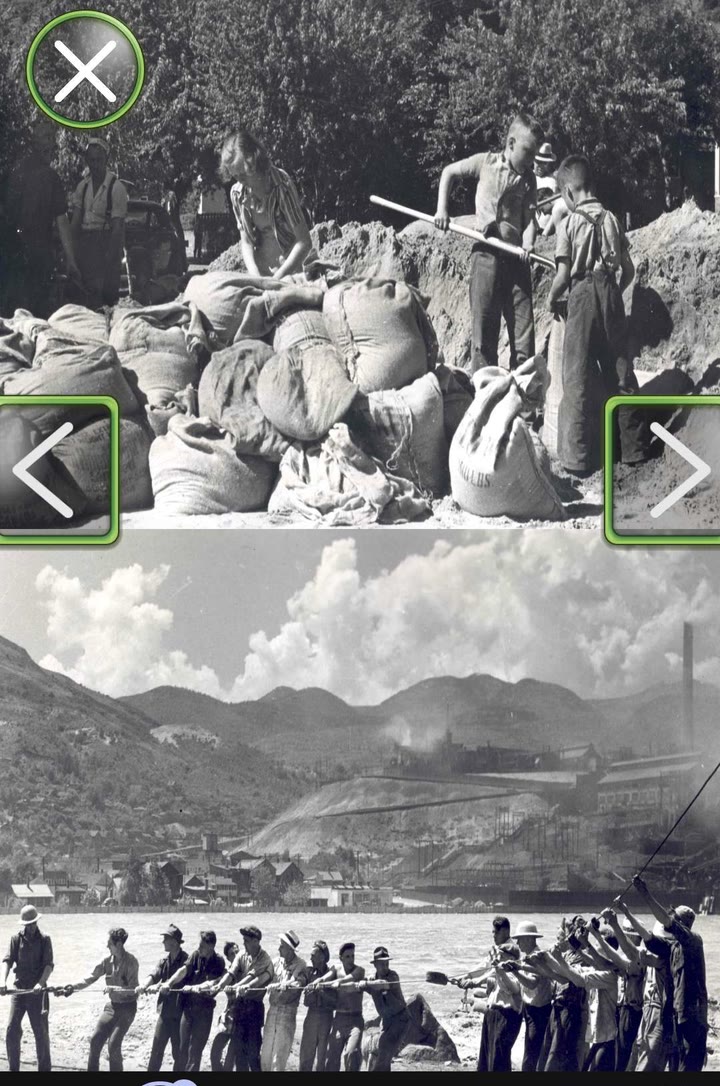
Drawn from Trail's own archive, and from footage shot while the water was still in the streets.
Trail's ongoing responsibility: nothing. ARify hosts and maintains the experience.
How it shipped
One build, two front doors.
A QR sign on the wall opens the experience, and that sign is the whole installation. But because it runs in the browser, it was never tied to that one sign.
Trail had separately commissioned a heritage scavenger-hunt app from On This Spot, a BC app studio — and because our build is just a URL, they dropped it straight into their app as a stop. One build served two products, with no second version for anyone to maintain.
That is the quiet advantage of building on the open web instead of a native app: the same experience can live inside a partner's app, a tourism site or a campaign without an SDK or a rebuild.
“The augmented reality was a fantastic addition to our own app that enormously enhanced the user experience and has helped garner the app increased interest and engagement.”
The result
The parking lot filled up.
Local press ran the story and people came. A spot most of them used to treat as a shortcut became somewhere to stop — standing in the lot with a phone raised, working through the archive photograph by photograph, hearing 1948 narrated on the exact ground where it happened.
Trail's own scan reporting is still early, and we publish nothing we haven't measured. But the format itself is well studied. The figures below are from independent industry research — not ARify's own Trail numbers — and they are why a scan-to-AR experience holds attention the way a plaque cannot.
engaged with AR, versus about 8 seconds for a digital ad
ThinkMobiles, 2022
of museum visitors called AR an exciting new way to explore a place
Cuseum AR visitor survey
more social sharing than static media
Hootsuite, 2022
The ripple effect
Who else it paid off for.
The mural was the deliverable. Three groups got something out of it, and only one of them signed the contract.
The artists
Tyler Toews and Steven Kolka signed this wall in 2009. The experience links out to Toews' work, so every scan sends traffic to the people who painted it.
The town
Links inside push visitors to Trail's other historic sites, so the mural starts a route instead of ending one. The town owns the channel and can point it anywhere later.
Visitors
They learn the town from the town rather than from a search result, and reach the next stop already interested.
Working with ARify
What it's like to work with us.
The wall is the part you can see. This is the part you have to take somebody's word for.
“ARify were great communicators and easy to work with. They drove the project themselves, so very little had to land on our desk, and when we gave feedback they turned it around fast. We're really happy with how the mural came out, and I'd love to see more Trail walls get this treatment.”
“We worked with Chey and his team at ARify to integrate their innovative AR product into the scavenger hunt app we were developing for a municipal client. … Chey and his team were creative, professional, and amicable; they were a great pleasure to work with and we are seeking out further opportunities to work together. I'd highly recommend working with ARify, and am excited to see what kind of Augmented Reality innovations they come up with next!”
“Chey and his team are a creative group that allowed us to bring our static heritage mural to life in an exciting way. Listening to our needs and incorporating other elements in our archival collection has created a unique and contemporary experience for our community. Always responsive to our concerns, ARify made this venture into augmented reality a smooth and stress-free process.”
In short
The wall didn't change. What it does did.
Nothing was repainted, and nothing was installed beyond a QR sign. A static wall that people walked straight past became a place they stop — one that tells its own story, reports back on who it reached, and plugs into whatever the town builds next. The art the artists made is untouched. It just does more now.
For your city
Curious what a wall like this could do for your city?
A renovation like Trail's works on public art you already own — no new commission, no new paint, and nothing for your team to run afterward.
You already own the expensive part.
The wall, the art and the permissions are paid for. A renovation buys the one piece that's missing, at a fraction of new work.
It costs your team nothing to run.
We host and maintain it. No CMS, no logins, no new system for someone on staff to inherit.
It extends to the rest of the collection.
Every wall the town already owns is a candidate. The first is a pilot, and the next costs less to justify.
And it reports back.
A painted wall produces no data. Every scan here is measurable — who opened it, how long they stayed, where they tapped through.
Tell us about a wall and we'll show you what it could do — before you pay a cent.