AR for institutions
Your collection already has the story. Give visitors a way in.
AR layered over what you already exhibit — objects, murals, dioramas, building facades. Nothing installed, no app, no case opened.
cases opened, labels reprinted, or apps to install
weeks from a photo of the piece to a live experience
to get a free concept of your piece back — no cost, no commitment
The case for your board
Interpretation your visitors actually stop for.
Interpretation budgets are hard to defend. An AR layer is the rare exception — it's cheap relative to the collection it upgrades, and unlike a wall label, it reports back.
You already own the expensive part
The object, the research and the rights are paid for. AR buys the interpretation layer that's missing — not a new acquisition.
Nothing for your team to run
ARify hosts and maintains every experience. No CMS, no logins, no new system for someone on staff to inherit.
It extends across the collection
Every object or wall you already exhibit is a candidate. The first piece is a pilot — the second is easier to justify.
It reports back
Dwell time and tap-throughs per object — numbers most interpretation programs simply don't produce.
Proof, not a pitch deck
We've done this for a public heritage subject already.
The Municipality of Trail, BC owned a flood mural nobody stopped for. We left the paint untouched and layered a no-app AR experience on top — an audio tour, historic photography, and the 1948 flood rising across the street. Delivered with no closure, no scaffolding, no new paint. It's live today.
Interpretation, at the object
The label has room for one paragraph.
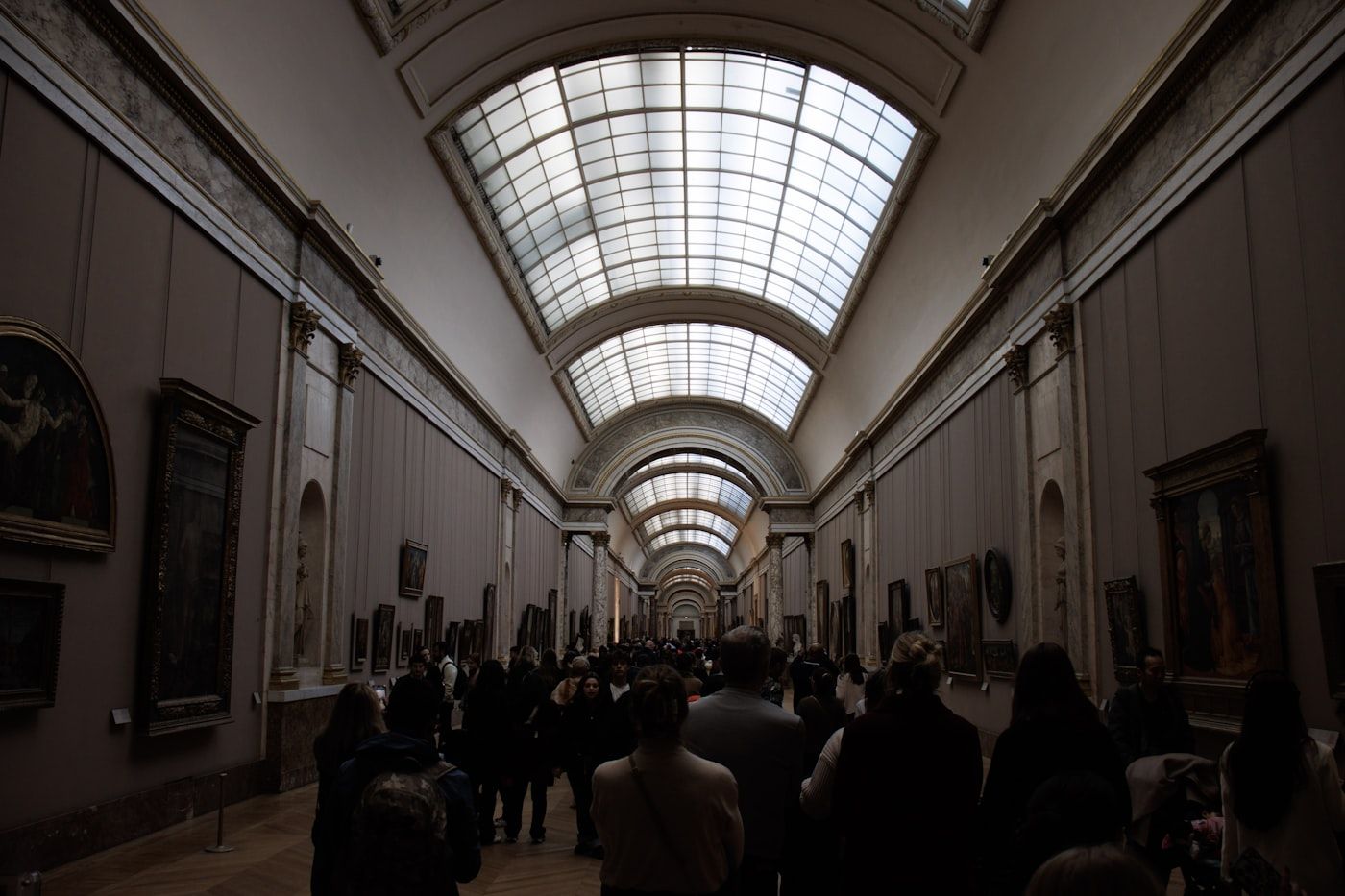
Everything else — the archive photograph, the curator's voice, the object as it looked when it was made — has nowhere to go. This puts it at the object itself, with no case opened and nothing installed.
See it running in public →How long AR holds a visitor
Engagement with a WebAR experience.
The Glenlivet · Rock Paper Reality
Dwell at an AR mural, vs 6–7 seconds for a static sign.
Dallas Mavericks · Groove Jones, 2019
Interactions for Louis Vuitton × Kusama across 18 sites.
Louis Vuitton · Aircards, 2023
What it costs
Scoped to your collection, not a fixed menu.
Every activation is priced to the piece, the complexity and how many objects it covers. Tell us your budget and we'll show you what it buys. Full ranges live on our services page.
See scope and ranges →Questions institutional staff ask
Before you bring this to your board.
Does this work on objects and interiors, not just walls?
Yes — anything with a stable visual surface: a painting, a facade, a diorama, a case, a panel. We scope it from photos.
Is the AR experience accessible to everyone?
The physical object always stands on its own, so nothing is lost for someone who doesn't scan. For the AR layer, we follow accessibility best practices — readable prompts, captions on audio, and reasonable performance on older devices.
What do you collect about our visitors?
Anonymous session counts and tap-throughs. No names, no accounts, and no camera footage ever leaves the phone. Full detail on our privacy page.
Can it run in languages other than English?
We can. Multi-language builds are scoped per project — tell us what your audience needs and we'll price it in.
For your vendor file
We respond to RFPs and can supply sole-source justification language and references on request. Experiences are static web builds — if you ever leave us, the build hands over cleanly.
Ask us: info@arify.caWork with us
Got a piece your institution already owns?
Send us a photo. We'll scope it, price it precisely, and show you what it could become — before you commit anything.